



Calculus Review
In this course you will learn how to define and describe informally the limit of a function and apply this limit to the tangent line problem. This leads to the idea of a derivative of a function, which you will learn to apply. You will also learn how to define and describe informally the integral, use the integral to answer area problems, and apply integration to the statistics problem of estimating probability density functions.
Overview
This course is a three-week primer on calculus. Calculus at this level concerns itself with three primary concepts: the limit, the derivative and the integral. Applications involving statistics supplement the more traditional calculus examples.
- Introductory
- 3 Weeks
- Expert Instructor
- Tuiton-Back Guarantee
- 100% Online
- TA Support
Learning Outcomes
In this course you will learn how to:
- define/describe informally the limit of a function
- apply this limit to the tangent line problem, which leads to the idea of a derivative of a function.
- apply derivatives
- define/describe informally the integral
- use the integral to answer area problems,
- apply integration to the statistics problem of estimating probability density functions
Who Should Take This Course
Anyone planning to study topics in statistics beyond the introductory level.
Our Instructors
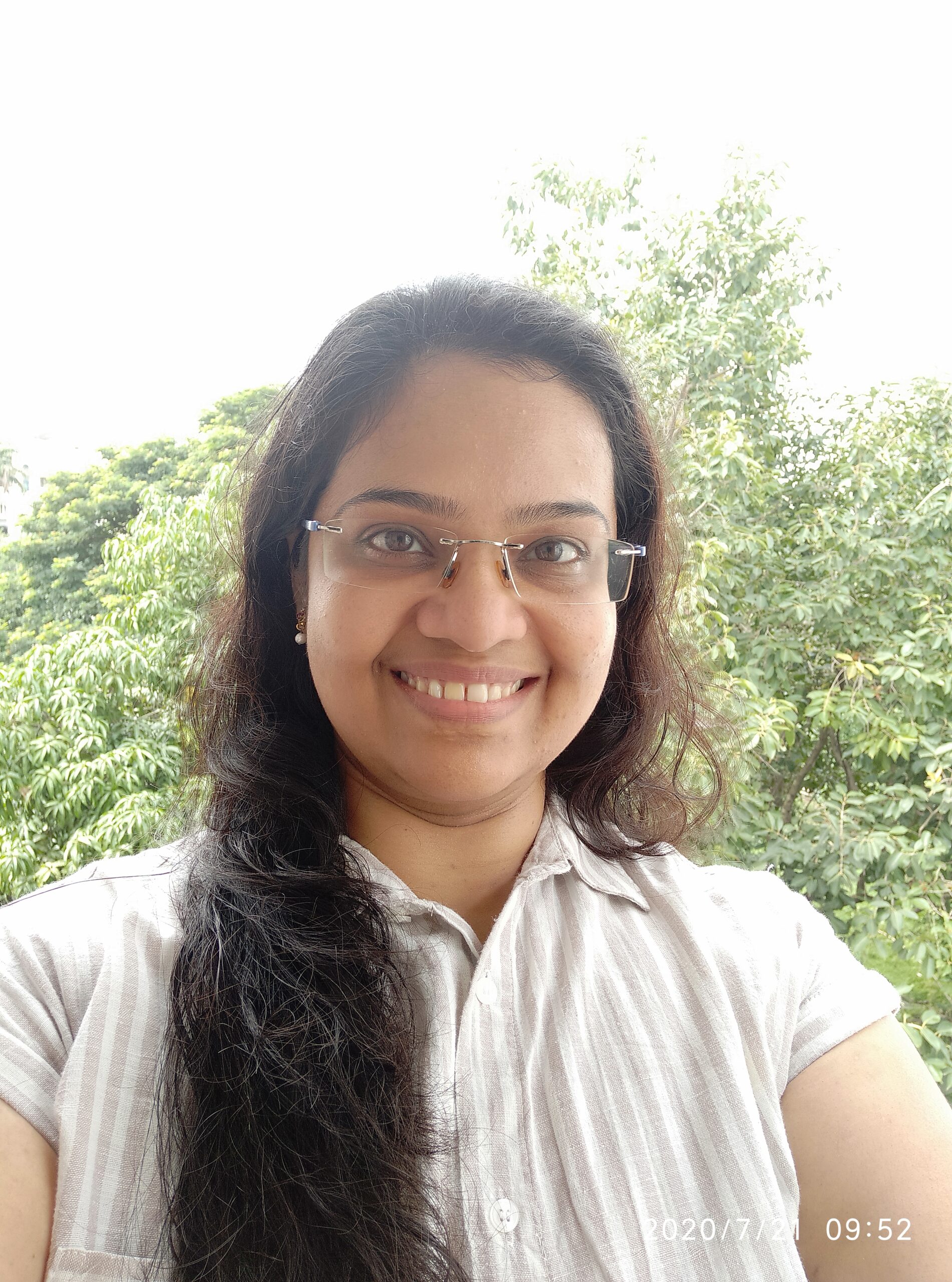
Ms. Anuja Kulkarni
Course Syllabus
Week 1
Limits, The Derivative
- Equations
- Lines & Slopes
- Functions
- Algebraic Properties of Functions
- Limits
- Tangent lines and derivatives
- Power Rule
- ProductRule
- Quotient Rule
- Derivative of a Sum of Functions
Week 2
Applications of the Derivative, The Integral
- Extreme Values
- First Derivative Test
- Optimization
- Example: Maximization
- Example: Maximum Likelihood
- Differentials
- Riemann Sum
- Definite integral
Week 3
Integration
- Fundamental Theorem of Calculus
- Antiderivatives
- CDF (cumulative density function)
- Indefinite integral
- Integration
- Moment generating functions
Class Dates
2023
Instructors: Ms. Anuja Kulkarni
2024
Instructors: Ms. Anuja Kulkarni
Instructors: Ms. Anuja Kulkarni
2025
Instructors: Ms. Anuja Kulkarni
Instructors: Ms. Anuja Kulkarni
Instructors: Ms. Anuja Kulkarni
Prerequisites
Familiarity with algebra


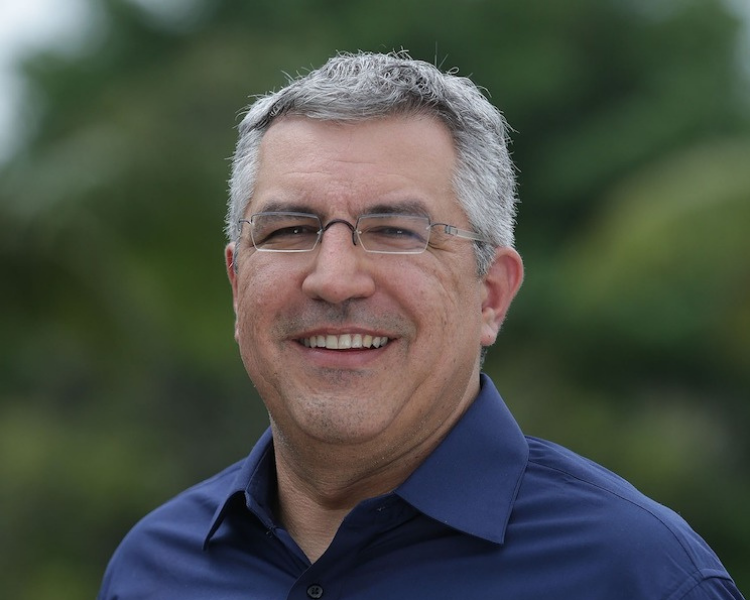




The Statistics.com courses have helped me a lot, pushing me to the limit and making me learn much more than I expected I could. The knowledge I gained I could immediately leverage in my job … then eventually led to landing a job in my dream company – Amazon.
Karolis Urbonas
This program has been a life and work game changer for me. Within 2 weeks of taking this class, I was able to produce far more than I ever had before.
Susan Kamp
The material covered in the Analytics for Data Science Certificate will be indispensable in my work. I can’t wait to take other courses. Great work!
Stephen McAllister
I learned more in the past 6 weeks than I did taking a full semester of statistics in college, and 10 weeks of statistics in graduate school. Seriously.
Amir Aminimanizani
This is the best online course I have ever taken. Very well prepared. Covers a lot of real-life problems. Good job, thank you very much!
Elena Rose
The more courses I take at Statistics.com, the more appreciation I have for the smart approach, quality of instructors, assistants, admin and program. Well done!
Leonardo Nagata
This course greatly benefited me because I am interested in working in AI. It has given me solid foundational knowledge…After completing this last course, I feel I have gained valuable skills that will enhance my employability in Data Science, opening up diverse career opportunities.
Richard Jackson
Frequently Asked Questions
-
What is your satisfaction guarantee and how does it work?
-
Can I transfer or withdraw from a course?
-
Who are the instructors at Statistics.com?
Visit our knowledge base and learn more.
Additional Information
Time Requirements
About 15 hours per week, at times of your choosing.
Homework
There are assignments in this course. These will be marked by an assistant teacher, but whether you need to be concerned with these marks depends on your purpose in taking the course. Some students are interested just in learning for learning’s sake, others may require a Record of Completion showing they have completed a course, some may need academic credit (offered in selected courses only) and some are enrolled in a Programs in Analytics and Statistical Studies (PASS).
Course Text
We will use the short text Calculus, by Gudmund R. Iversen for readings. This text is a little short on examples, so there are lengthy course notes to accompany the text prepared for each of the three weeks. These notes are in PDF format and are intended to be printed, if desired. They have a wide right margin for taking notes, a style borrowed from Edward Tufte’s texts.
Software
Examples of using Sage to solve various problems are given. Sage is a free-to-use, open-source software system that can do symbolic mathematics and is available at no charge at Sage Notebook.